The Architect as Arbiter: AI, Digital Fabrication and Community Engagement
Kyle Spence & Sabri Gokmen
Community Engagement, Jazz Space, Digital Fabrication, Representation
A Foundation in Digital Fabrication and Parametric Design
Kyle’s journey began in the challenging post-graduate landscape, where digital fabrication and parametric architecture were just emerging as transformative tools. Fresh out of grad school at Columbia University GSAPP, he immersed himself in projects that blended industrial design with architectural innovation. His early work in Harlem—ranging from retail spaces and renovation projects to branding initiatives—showed his commitment to digitizing concepts into tangible realities and empowering communities through the use of technology. One of his first major challenges was a restaurant project in 2012, completed during a recession when opportunities were scarce. To get the project off the ground, he even hired one of his professors as the architect of record, setting the stage for a career defined by creativity, resilience, and a willingness to take risks.
Evolving Through Digital and Analog Techniques
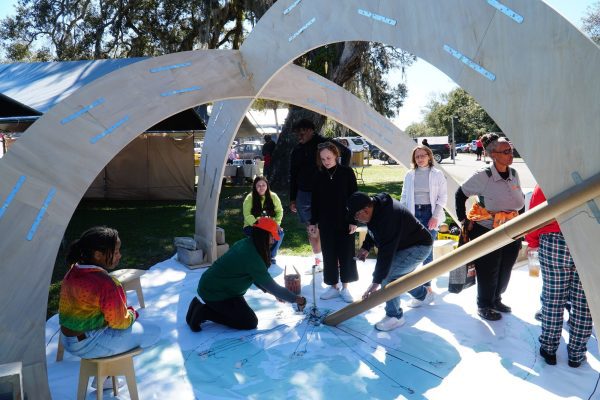
In the years following grad school, Kyle’s passion for digital fabrication led him to explore new mediums. Driven by a desire to sustain his work, he transitioned into furniture making around 2020, delving into CNC fabrication and flat-pack designs. These experiments allowed him to push the boundaries of traditional architectural practice, merging digital precision with hands-on craftsmanship. His practice evolved into a hybrid model that balanced the immediacy of digital outputs with the nuance of manual refinement—often employing collaging, hand-drawn sketches, and Photoshop automation to create evocative visuals that communicated clear design concepts.
Kyle Spence
Adopting AI as a Collaborative Partner
A pivotal moment in his career came around 2022 when Kyle began experimenting with AI tools such as Midjourney and Adobe Firefly. He recalls, “I realized that the speed and efficiency of AI in generating design options could be transformative.” Though his initial experiments yielded mixed results—sometimes producing overly photorealistic or imprecise images—these tools opened up new dimensions in his creative process. Kyle found that AI-generated imagery could serve as a powerful starting point, which he would then refine manually. By blending traditional techniques with digital enhancements, he was able to create visuals that were not only innovative but also deeply reflective of his unique artistic voice.
Integrating AI into the Classroom
Kyle’s journey eventually led him into the realm of education. In 2018, he began teaching at institutions such as the Fashion Institute of Technology (FIT), the New York School of Interior Design (NYSID), and Florida A&M University (FAMU), where he brought his diverse experience to the classroom. He encourages his students to view AI as a brainstorming tool—one that can rapidly generate multiple design iterations from textual prompts. At UNCC, he integrated generative AI into seminar courses that focus on architectural representation. Through hands-on workshops, he guides students in refining AI outputs, teaching them to edit, layer, and transform digital images into compelling visual narratives. His teaching approach emphasizes the importance of iterative design, ensuring that while technology expedites the ideation process, the final creative decisions remain in the hands of the human architect.
The “Jazz Space”
In his creative workflow, Kyle coined the term “JazzSpace” to capture the dynamic interplay between spontaneous AI-generated imagery and meticulous hand refinement. In this innovative zone, he approaches design as an improvisational art form—much like a jazz performance—where every digital output becomes a starting note for further creative exploration. Embracing this perspective, he regularly leads workshops that invite students to experiment with this hybrid process. During a memorable session at an ACSA workshop last summer, participants were encouraged to listen to jazz music and translate that rhythm and emotion into visual collages. Using AI tools alongside Photoshop, they learned to layer and refine their initial ideas into compelling, personalized images. This approach not only demystifies the technology but also empowers emerging designers to use AI as a collaborative partner, ensuring that the final creative decisions remain deeply human.
Philosophical Reflections and the Future of AI in Design
Kyle’s engagement with AI extends beyond its practical applications. He reflects on the broader implications of this technology for the creative process and teaching at UNCC, arguing that while AI can democratize design by rapidly generating options, it cannot replicate the idiosyncratic nuances that define handmade art. His philosophy—that the architect must remain the arbiter of creativity—drives him to continually push his creative boundaries. He envisions a future where AI acts as a collaborative partner, one that enhances efficiency without diminishing the importance of human judgment and artisanal skill.