Craft, Curiosity, and Code
Pelin Alkan & Sabri Gokmen
Ceramics, Generative AI, Design
Pelin Alkan
Pelin Alkan’s journey into design began in the richly layered city of Istanbul. As a student of interior architecture at Istanbul Technical University, she drew inspiration not only from the city’s physical structures but also from its layered history and cultural vibrancy. “Istanbul became my first design studio,” she says. Her graduate studies in Milan further transformed her understanding of design—not simply as function or aesthetics, but as an integrated cultural lifestyle.
In Italy, Pelin was captivated by the idea that design was embedded into everything. It was there she first encountered the German concept of Gesamtkunstwerk—the total work of art. This idea continues to guide her approach: a belief that all aspects of architecture, design, and craft must be harmonized. For Pelin, design is not about parts, but wholes. Whether it’s a vase or an exhibition space, every detail matters, from door handles to lighting, from narrative to form.
Weaving Narrative Through Exhibitions
This holistic philosophy found its natural outlet when she was encouraged by mentors in domus academy in Milan during her studies to pursue a career in exhibition design. She first joined Markus Miessen’s Berlin-based studio, contributing to projects that blurred the boundaries between architecture, curation, and cultural commentary. Later she relocated back to Istanbul to work with the interdisciplinary firm PATTU and pursued a master’s in design at Kadir Has University working on a thesis on ways of exhibiting cultural heritage artifacts.
“Designing exhibitions taught me to investigate deeply,” she explains. “You don’t just arrange artifacts—you narrate a story through space.” For Pelin, this was another form of Gesamtkunstwerk: integrating historical knowledge, spatial design, material decisions, and user experience into one meaningful whole.
First Encounters with Artificial Intelligence
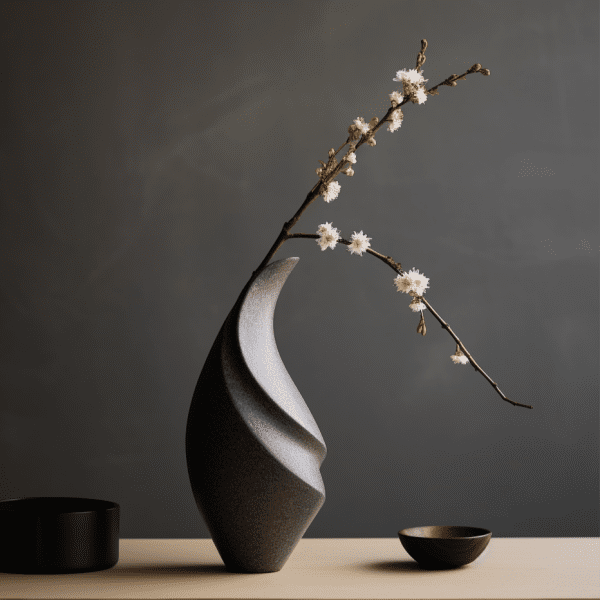
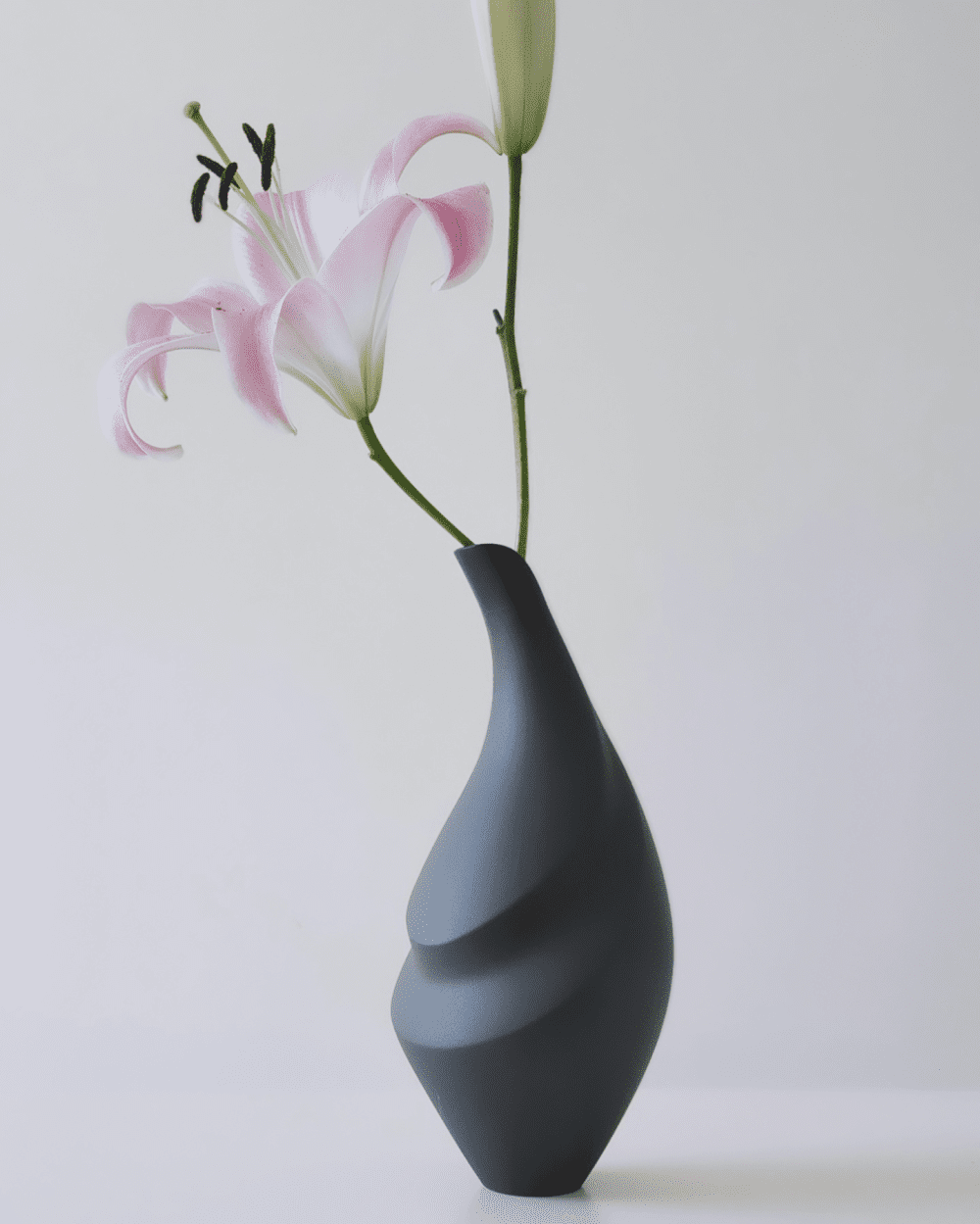
In 2022, while experimenting in her ceramic studio in Istanbul, Pelin began exploring AI as a creative partner. She used Midjourney, a text-to-image generator, feeding it prompts like: “What if Frank Gehry designed a ceramic vase?” The results varied wildly, but one prompt—based on the work of Isamu Noguchi—stood out enough for her to pursue it further.
From this, a physical object emerged. She modeled the form in Rhino, 3D printed it, created a plaster mold, and used slip casting to form the ceramic. The final product was a glazed stoneware vase—later exhibited at Milan Design Week 2025 under the curatorial theme Design is Human.
Authorship and Satisfaction
Despite the success of the AI-generated piece, Pelin wrestled with its authorship. “When I design something by hand, there’s a personal connection—I feel it’s mine,” she reflects. “With AI, I felt more like a contributor, not the designer.” The process of translating a flat AI image into a three-dimensional object was rich with design decisions, yet the origin of the idea remained outside her.
This distinction—between generating and crafting—sits at the heart of her creative practice. Making by hand offers a deeper form of satisfaction. It’s slower, yes, but it’s also more reflective, deliberate, and uniquely human.
Teaching with—and Beyond—AI
As a lecturer at UNC Charlotte, Pelin remains thoughtfully cautious about introducing AI too early in design education. “Maybe I’m a bit old school,” she admits, “but I think that might be a good thing.” She believes students need to build a solid foundation in conventional design methods before engaging with generative tools. History, theory, and manual modeling aren’t nostalgic—they’re essential.
She’s observed that graduate students, who already understand the fundamentals, navigate AI tools more thoughtfully than undergraduates. “They can ask better questions,” she says, “which makes them better curators of AI-generated ideas.” For her, AI isn’t a creative replacement—it’s a tool that still depends on design literacy.
From Quantity to Meaning
Pelin also raises a cultural concern: that AI may shift design values from quality to quantity. “These tools satisfy our need for abundance,” she says. “You can generate endless options, but that doesn’t mean you’ve created something meaningful.” The speed and volume of AI outputs can be seductive, but they risk diluting the kind of deep creative satisfaction that comes from crafting something unique and personal.
She fears this abundance may lead to superficial design practices, especially if students skip the critical steps of conceptual development and material exploration. “We have to preserve what makes design valuable,” she notes. “And that’s not more—it’s meaning.”
A Future That Balances Tradition and Innovation
For Pelin, AI is neither villain nor savior. It’s a tool—useful, powerful, and growing in influence. But it should be approached with care, especially in educational settings where habits are formed. “We’ll use it,” she says, “but we need to know what we’re doing with it.”
Her own practice stands as a model for balance: embracing AI for inspiration, but insisting on traditional processes for realization. Through her story, she reminds us that while the tools of design may evolve, the core of design—the desire to make, to question, to create with intent—remains beautifully, defiantly human.