What Did I Just DO? Why Professors Need AI Literacy
Ashli Stokes
Plagiarism Engines, AI Literacy & Ethics, Academic Integrity
Ashli Stokes
I love teaching for the Honors College. Every time I get to teach a 3700 seminar class, I get to enjoy spending three hours a week, compressed into one weekday class period, with a small group of very smart students from across the University. We get to discuss concepts in deep detail, go out into the community and campus to conduct fieldwork, and finish it all off with fantastic team talks. It’s often the first time, too, that some students are introduced to concepts from my discipline; in this case, rhetoric (broadly, the study of persuasion). I’ve taught engineering students how to conduct rhetorical criticism and business majors to think more deeply about how to communicate their ideas more successfully.
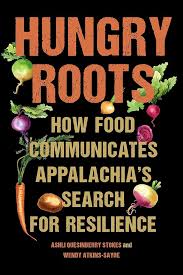
In Fall 2023, I had the opportunity to teach a class called Consuming Appalachian Foodways, where we learned how food in the Appalachian region communicates messages about who we are, what we eat, and what it means. I study food and communication and previous classes of students had loved learning about how foods communicate messages about regions, identities, and more. This semester, I was particularly excited because I had a new academic book manuscript out for review, and the students were my “test case” – they provided feedback about chapter concepts, cover art, examples, and more, serving as peer editors.
One day, I thought it would be neat to see how CHAT GPT would create a reading comprehension quiz based on one of my new book’s chapters. I wanted to see if the tool could help create questions that developed the students’ understanding of rhetoric and the region alike. I happily uploaded AN ENTIRE CHAPTER of my forthcoming book into the text field and waited for the tool to spit out the results. Unfortunately, I discovered the questions did not adequately query the students about the chapter content, lacking nuance or even basic context; even worse, I quickly realized in a panic that I had just shared my research with an LLM that could “memorize,” copy verbatim, and generally steal my ideas without appropriate attribution or citation. At the time, I had no idea about how AI stored data, how it uses it, and how the academic community needs to better understand this technology.
Our job as professors is to teach students to be critical thinkers and consumers of information, and I had just committed a rookie mistake. Since then, I’ve become more convinced that teaching and learning critical AI literacy is necessary for us all. Within and beyond UNC Charlotte, it is imperative that we develop the ability to understand, apply, and assess AI operations, uses, and outputs (Vee, 2025). That semester taught me I had a lot to learn regarding functional, rhetorical, and ethical AI literacy (Vee, 2025). I’m teaching a new version of this class in Fall 2025. I hope to use AI to create interesting exercises for the students, but I won’t upload large chunks of my latest research data. I plan to use the tool to see how we can communicate better messages about the places in which we live. Maybe I won’t mess up this time around. Further Reading: “What is Critical AI Literacy? And What Should Writing Teachers be Teaching About AI?” by Annette Vee