Increasing Teacher Effectiveness Through the Use of AI Tools

Maghan Kirschner
Data Driven Coaching, Video Reflection, Observation & Feedback
As I walked into Ms. Coveart’s 3rd grade classroom, I paused at the door to take a deep breath. Ms. Coveart is a first-year elementary school teacher. At the beginning of the year, she was extremely eager and excited to begin her teaching journey. In mid-December, she had a decline in motivation and was less receptive to engage in our coaching relationship. I was struggling to figure out how to reach her. How can I support her in her receptiveness to coaching and commitment to consistently implementing feedback?
I decided that I needed to tap into what motivates her. It became clear, through conversation and observation, that she used student data and goal setting to motivate her students. She needed the exact thing from me to motivate her as a teacher. So far, hearing feedback based on my classroom observations was great. She trusts me. She respects me, and most importantly, she values what I can bring to her experience as a beginning teacher. All of that has allowed us to build a strong coach-coachee relationship. But I needed more than the traditional observation/feedback model to gain traction in her room. I needed something different. Enter AI.
Up until this point, I entered Ms. Coveart’s classroom, observed instruction, and met with her in person or virtually. Most recently, we began utilizing video reflection to help her process and see specific teacher and student moves to determine our next steps. I needed something more concrete to guide our discussions. I began using an AI function found in a digital platform called Sibme, which is an online video coaching and collaboration platform that makes it easy for instructional leaders, coaches, teachers, students, and other professionals to improve their practice through the use of video reflection and feedback. Through updates in Sibme, AI components have been added to the platform that align directly to quantitative data coaches can use in coaching cycles. The ability to use AI was exactly what I needed to support Ms. Coveart.
Ms. Coveart and I were able to record her lesson, and with the click of a button, coaches have transcripts of the lesson, an AI summary of the lesson, key takeaways, and access to 17 different AI reports to support teaching and learning. The use of these various reports has been revolutionary in my coaching cycles with beginning teachers. In a matter of moments, I was able to take subjective teacher observations and transform them into objective, data driven feedback.
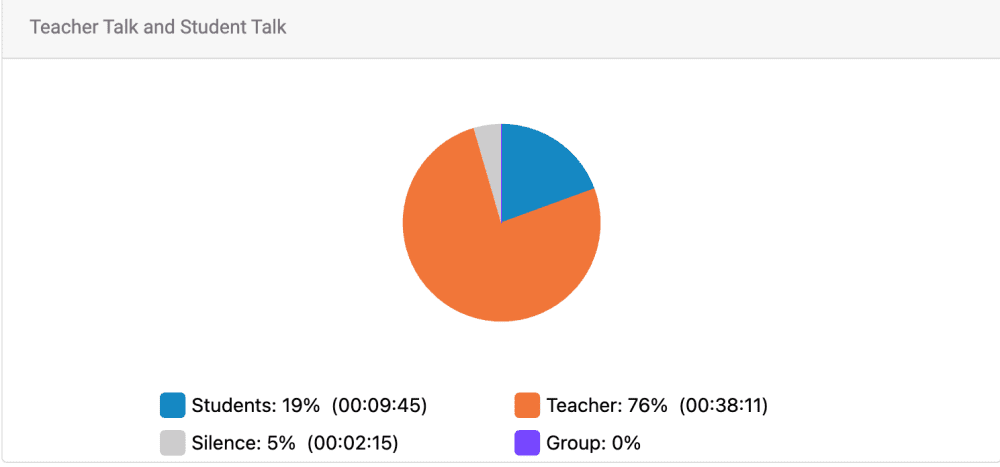
One of the ways AI-aligned feedback has impacted instructional coaching is the ability to anchor feedback in specific objective data points. The pie graph below was instrumental in shifting our goals to focus on student-to-teacher talk ratio. This has been a coaching point we have worked on for two coaching cycles. It wasn’t until she saw the AI report from her recorded lesson that Ms. Coveart was able to have the “aha” moment using concrete data through AI coaching feedback. From here, we were able to shift into authentic, consistent, and genuine implementation of feedback (increasing open-ended questions, allowing opportunities for student discourse with sentence stems, etc.).
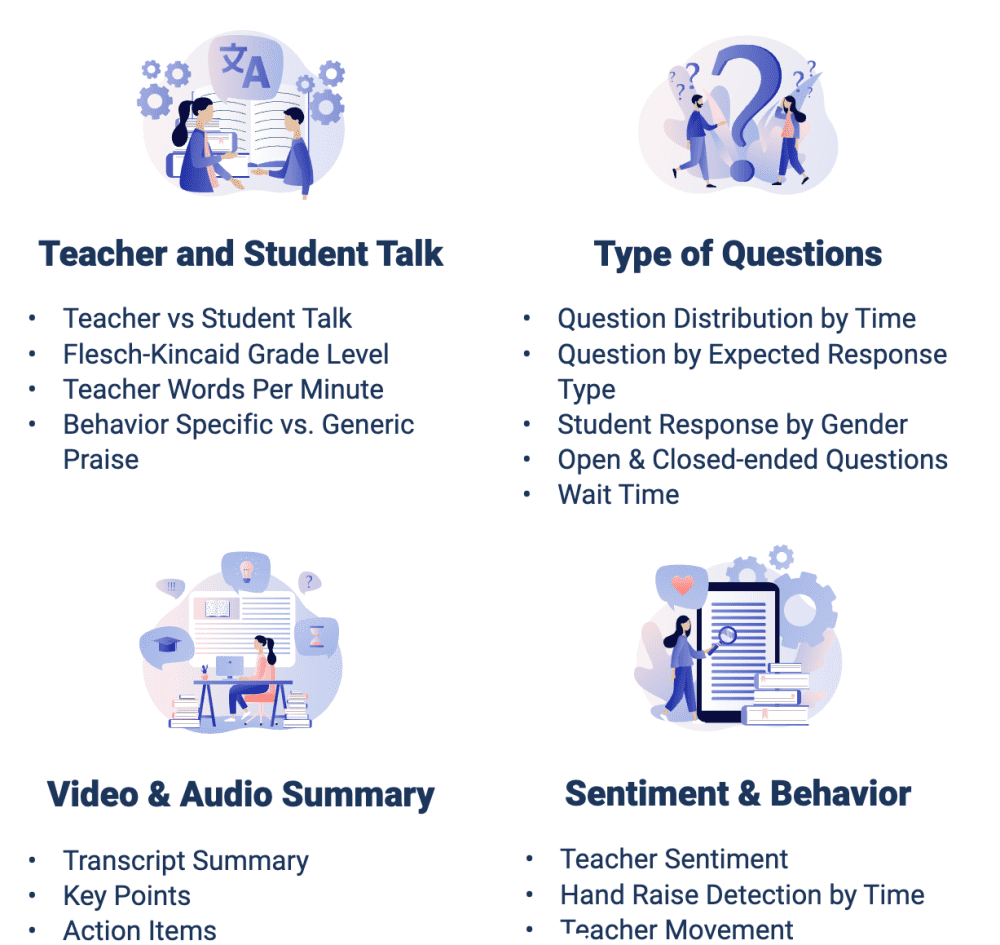
Once you access the report created from the teaching video, Sibme’s AI provides you with a link to various Companion Resources focused on the specific report you have pulled (i.e. teacher and student talk ratio). This information is also AI generated and is easily accessible for coaches and teachers.
Incorporating AI tools like Sibme into instructional coaching has proven to be a transformative approach in supporting new teachers like Ms. Coveart. By moving beyond traditional observation and feedback methods, AI allows for a data-driven coaching cycle that provides concrete insights, fostering more targeted and meaningful professional growth. This integration of technology into coaching has not only rekindled her enthusiasm for teaching but also significantly increased her effectiveness in the classroom. In recent lessons, the percentage of teacher talk has decreased from 78% to 30% with the remainder split evenly between student talk and group talk. As AI continues to evolve, it holds the potential to revolutionize the way we support teachers, providing them with the tools and data necessary to thrive in their profession.